

Making the most of a small Victorian terrace garden
A Victorian terrace garden is often a long, narrow strip behind the house — overlooked on both sides, with heavy clay underfoot. The good news is that this is exactly the kind of space where clever layering beats size. By using reclaimed bricks for structure, climbers for height and raised beds for produce, you can turn even the smallest backyard into somewhere that feels generous, green and genuinely useful.
Start with the bones: paths, edges and reclaimed bricks
Before you buy a single plant, sort out the layout. Victorian plots usually run straight back from the house, so a central path wastes width. Push it to one side, or use stepping stones through planting, and keep the main route 45–60cm wide. Reclaimed bricks are perfect for this: they suit the age of the house, soften the look of new timber and can be laid on edge as a low kerb around beds. Use them to edge raised beds, form a small patio or build a low wall that doubles as a seat.
Choose frost-resistant bricks and knock off old mortar before laying. A bed of compacted hardcore, then sharp sand, is enough for a garden path. Leave small gaps between bricks and fill with sharp sand or a little compost; thyme, chamomile or mind-your-own-business will soon creep in. Pale or yellow stock bricks reflect light into shady corners. If you have an ugly drain cover or concrete slab, screen it with a brick planter rather than fighting it.
Climbers: the vertical harvest
Walls and fences are your biggest untapped resource: a narrow garden has more vertical surface than ground. Fix trellis or galvanised wires to the wall using spacers, keeping air moving behind the plants. For colour and scent, try star jasmine, honeysuckle, clematis armandii or a climbing rose. For shade, choose climbing hydrangea or a vigorous ivy — but keep ivy in check so it does not swallow the shed.
Climbers can also feed you. Runner beans, French beans and cucumbers will race up a wigwam of canes in a sunny corner. Tumbling tomatoes work well in a hanging basket, whilst cordon tomatoes can be trained up a single cane against a warm wall. Sweet peas are worth growing purely for the scent, and they will keep flowering if you pick them regularly.
- Sunny wall: runner beans, tomatoes, cucumbers, grapes.
- Shady wall: climbing hydrangea, fatsia, ivy, hosta in pots below.
- Scent: jasmine, honeysuckle, sweet peas, climbing rose.
- Privacy: pyracantha, ceanothus, evergreen clematis.
Raised beds that earn their space
Raised beds solve two Victorian terrace problems: poor, compacted soil and bad drainage. Build them no wider than 1.2m so you can reach the middle without stepping on the soil. A depth of 30–40cm suits salads, herbs, onions and strawberries; go to 45cm for carrots, parsnips and maincrop potatoes. Reclaimed bricks make handsome edges, but timber is quicker and cheaper. Line the sides with a permeable membrane, but leave the base open to the soil so worms can move in.
Fill the bed with a mix of topsoil, garden compost and well-rotted manure. Then adopt a no-dig approach: spread 5cm of compost each autumn and let the worms do the work. In a small plot, every crop must pull its weight. Interplant quick salads between slower brassicas, grow basil under tomatoes and radishes between carrot rows. A simple rotation — roots, brassicas, potatoes, legumes — helps prevent disease, even in a tiny space.
Colour and crops for every aspect
Packing in colour is easier if you think in layers. At ground level, use hardy geraniums, heuchera and euphorbia for structure. Above them, dahlias, salvias and pelargoniums flower for months. Bulbs — tulips, alliums, snowdrops — give you spring colour before the perennials wake up. For edible beauty, rainbow chard, red kale and purple basil are as ornamental as any flower.
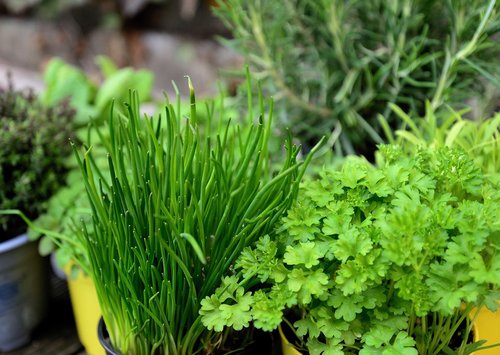
Match plants to your light. In sun, grow tomatoes, peppers, chillies, courgettes and herbs such as rosemary and thyme. In shade, lettuce, rocket, spinach, parsley, mint and chives will all crop happily. Use wall pockets, hanging baskets and window boxes to add another layer. Water little and often in summer, mulch with compost to lock in moisture, and feed tomatoes and peppers weekly once the first flowers set.
Comfort, storage and the small daily pleasures
A tiny garden needs somewhere to sit. A foldaway bistro set, a bench with storage under the seat or a simple brick plinth with a cushion will do. Add solar festoon lights, a lantern or two and a small water butt connected to the downpipe. A slatted screen or tall trellis can soften overlooking without making the space feel closed in.
Keep tools in a slim cupboard or a weatherproof box that doubles as a side table. A compost bin — even a small wormery — turns kitchen scraps into feed for your raised beds. Little and often is the secret: twenty minutes of deadheading, tying in climbers and picking produce will keep the garden looking loved. In autumn, clear fallen leaves, mulch the beds and plant spring bulbs. By winter, seedheads and evergreens will give you structure, and by next spring the whole narrow strip will be ready to perform again.
tag: Gardens

Charlotte Bexley Author
Always learn reliable identification, pick only abundant fruit and leave doubtful specimens alone before making jams or cordials.
YOU MAY ALSO LIKE
Autumn foraging for safe berries in country kitchens
Jul 14
10Simmer spices with apple juice or make a rich hot chocolate, then serve in sturdy mugs beside the fire.
read more
Winter warming drinks for frosty evenings at home
Jul 8
10Measure the alcove, fix sturdy brackets and use labelled jars to keep flour, rice and pulses tidy and accessible.
read moreInteriors
-

ERRIC CATONA
Gather evergreen clippings, bend a willow ring and tie small bunches with twine for a rustic seasonal decoration.
May 19, 2016 at 5.12 pm
Reply
ERRIC CATONA
Lift old boards carefully, repair joists, sand gently and then finish with hardwax oil to protect the timber.
May 19, 2016 at 5.12 pm
Reply -
ERRIC CATONA
Fit a rigid insulated cover, seal the frame with draught strips and check the hatch closes snugly before winter.
May 19, 2016 at 5.12 pm
Reply
Fireplaces
Your email address will not be published.