
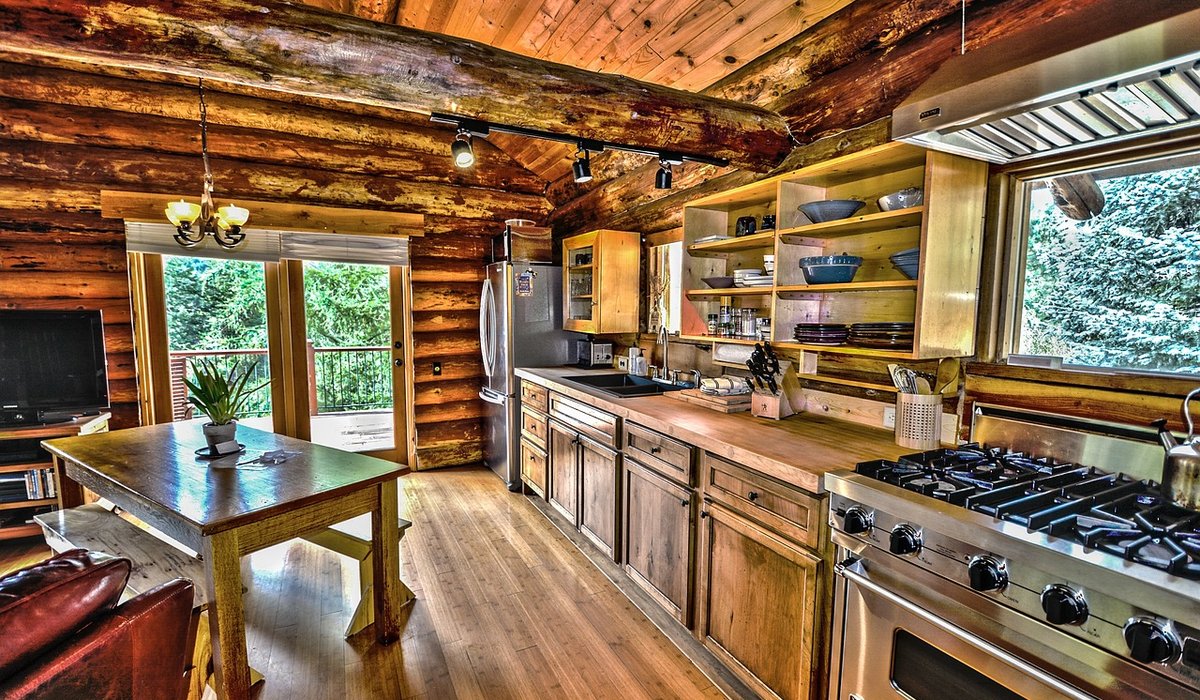
Choosing the right log burner for a small cottage
Start with the room, not the stove
Before you open a single brochure, measure the room properly. Take the width, depth and height of your snug in metres and multiply them together to get the volume in cubic metres. As a working rule for a reasonably insulated cottage room with a standard ceiling, allow roughly 1 kW of stove output for every 14 cubic metres of space.
What you should not do is double the figure "just in case". In a small room, spare capacity is not comfort — it is a problem waiting to happen.
Why an oversized stove is a false economy
A large stove crammed into a small room has to be run starved of air to keep the temperature bearable. That means a smouldering fire, a blackened glass door, tarred-up flue and a chimney that smokes rather than draws. You will also find yourself opening a window in February, which is an expensive way to heat a village.
A correctly sized stove does the opposite. You load it, run it hot and clean, and it settles into a steady, gentle warmth. In a cottage the aim is a small fire burning briskly, not a big fire throttled back. It is kinder to the chimney, kinder to the air and far more pleasant to sit beside.
Clearances, hearths and the awkward corners of old cottages
Cottages were never designed around stoves. Beams sit low, walls are uneven, and there is often a timber lintel exactly where you would like the flue to go.
- Side and rear clearances: non-combustible surfaces such as brick or stone typically need about 150 mm of clearance; combustible surfaces such as timber panelling, beams and skirting often need 300 mm or more. Manufacturer's instructions always override the rule of thumb.
- The hearth: it usually needs to extend at least 300 mm in front of the stove door and 150 mm to each side, with a depth of 12 mm of non-combustible material over a solid floor, or 125 mm where the floor beneath is combustible.
- Ventilation: once output exceeds 5 kW you need permanent ventilation, typically a 550 mm² air brick for every kilowatt above that figure. If you have had draught-proofing done recently, this matters more than you might think.
- Alarms: a carbon monoxide alarm is a legal requirement in the same room as any solid fuel appliance in England.
Shape, size and siting: what actually fits
Output tells you nothing about whether a stove will squeeze into your alcove. Check the overall footprint including legs and rear heat shield, and remember that clearance distances apply to the body of the stove, not the hearth edge.
Think about the door. A side-hinged door needs a clear arc to swing through, which can be awkward in a narrow inglenook. A stove with a smaller firebox and a top or front loading door often suits a tight recess better than a wider, shallower model. Convector stoves — those with a double skin that pushes warm air out into the room — can feel warmer faster in a small space, because they warm the air rather than relying on radiant heat alone.
Height is your friend. A taller, narrower stove gives you a decent firebox without eating the width of the room, and it puts the flames nearer eye level when you are sitting down.
Fuel, air and burning habits for a small firebox
A small firebox rewards good fuel and punishes poor fuel. Use seasoned or kiln-dried wood with a moisture content below 20 per cent. A cheap moisture meter costs very little and will tell you more about your wood supplier than any glossy label. Split logs smaller than you would use in a large stove — roughly 25 to 30 cm long and no thicker than your forearm — so they catch quickly and burn hot.
Learn your stove's air controls. Open the primary air to get the fire established, then close it down to the secondary air, which feeds the flames above the fuel and burns off the gases. Once the stove is up to temperature, refuel little and often rather than filling the box and shutting it down. A couple of small logs every 45 minutes gives steadier heat than one enormous one.
Installation, rules and the paperwork
Much of urban and suburban Britain lies within a smoke control area. If yours does, you need a DEFRA-exempt stove and you must burn authorised fuel. Separately, all new stoves sold in the UK must meet Ecodesign standards, so a modern appliance will be markedly cleaner than the one it replaces.
Most small stoves take a 125 mm flue. If you are lining an old chimney, an insulated flexible liner backfilled with vermiculite will outperform a bare one every time, particularly on a cold external stack where condensation and poor draw are common. Your installer should be registered for solid fuel work and will notify your local authority building control on your behalf.
Get the sizing and clearances right and a modest stove will quietly heat the heart of your cottage for twenty years. Get them wrong and you will spend that time fighting it.
tag: Fireplaces

Eleanor Hartley Author
Split logs need air and time to dry, so stack them loosely and cover only the top before the cold arrives.
YOU MAY ALSO LIKE

How to season firewood properly for winter warmth
Sep 22
10Combine warm lamps, dimmable wall lights and a subtle glow from the hearth to create gentle evening atmosphere.
read more
Layering lighting for a cosy British sitting room
Sep 20
10Natural fibres respond well to gentle warmth, but choose the right underlay and tog rating to avoid overheating.
read moreInteriors
-

ERRIC CATONA
Use vertical planters, folding furniture and pale boundaries to make a slim outdoor space feel open and inviting.
May 19, 2016 at 5.12 pm
Reply
ERRIC CATONA
Choose tough rosemary, thyme and mint, then group pots for shelter and water them early before the sun climbs.
May 19, 2016 at 5.12 pm
Reply -
ERRIC CATONA
Open windows, beat rugs and wipe salty winter residue from sills to let fresh air move through every room.
May 19, 2016 at 5.12 pm
Reply
Fireplaces
Your email address will not be published.